



At the nursery, you'll find hyacinths, muscari, daffodils, camassias, chionodoxas and galanthus. There are so many beautiful choices!

Planted in the lawn, Scilla sibirica creates a carpet of blue flowers worthy of the most beautiful garden photos! As the grass begins to grow, the spring flowers and foliage gradually disappear. Scilla requires no maintenance and naturalizes from year to year.
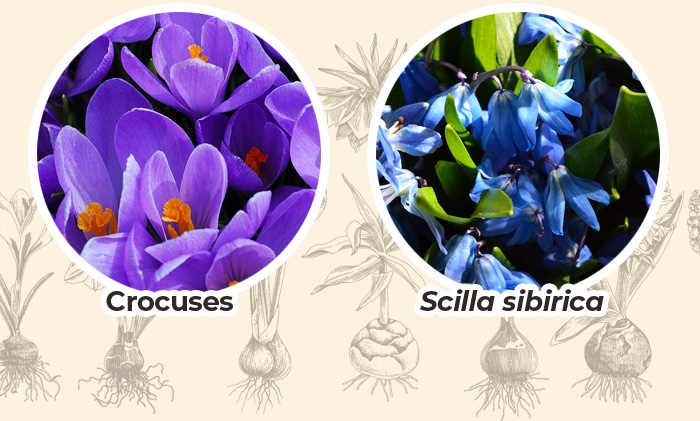
Eremurus, although not technically a bulb, is more accurately described as a tuberous rootstock, similar to that of a dahlia. Its impressive flower spikes can reach up to 1.5 metres tall and are sure to attract attention.
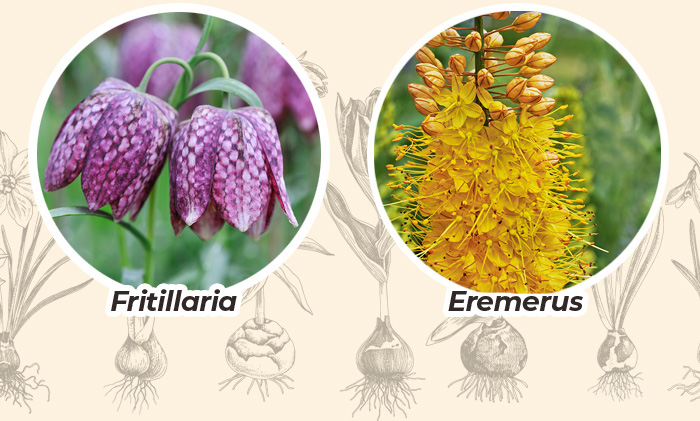
Finally, discover our selection of ornamental garlic, which provides colour during the transition between early spring blooms and summer flowers. The key to success with these varieties is to plant them among slightly shorter shrubs. By the time the garlic foliage turns yellow, the shrubs will be at their best, naturally hiding the fading foliage.





|



• Certain conifers and evergreen shrubs;
• Non-hardy roses or roses growing at the limit of their hardiness;
• Hedges exposed to salt spray and de-icing salts;
• Any plant at risk of mechanical damage from snow removal or heavy snowfall.

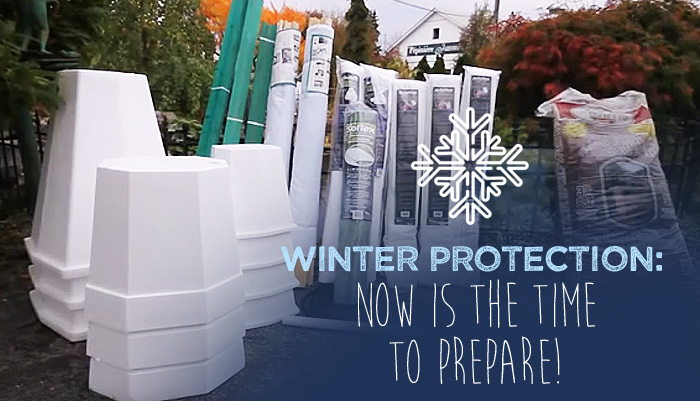
• White plastic tree guards placed around the trunks of young trees help protect them from rodents. Keep an eye on snow depth: mice, field mice and voles may be able to reach higher branches when the snow is deep.
• Arbotex covers (synthetic fabric) provide excellent protection against salt spray and drying winds for conifers and evergreen plants. Easy to install and reusable, they can be placed directly around trees and shrubs.

• Polystyrene cones protect small plants from wind, cold, the weight of snow and freezing rain. They are ideal for roses. Pépinière Jasmin also offers eco-friendly cones made from 100% recycled newspapers and advertising flyers! Geotextile winter protection tents are another practical option and are easy to store during the warmer months.
• To protect your lawn from abrasives spread on public roads, choose Soltex covering.
• To prevent damage caused by the weight of snow or freezing rain, several options are available:
| • Netting: lightweight, extremely strong and easy to install; • Jute: a renewable raw material. Since it should not come into direct contact with the leaves of protected plants, it should be secured with stakes. Jute fabric does not provide adequate protection from cold or wind desiccation; • Wooden snow fencing: protects against blown snow or can be used as a support structure to keep protective covers in place. |





| The columns in this newsletter are signed by Julie Lemieux for Jardin Jasmin |
 |
6305 Boul Henri-Bourassa W, Montreal, Quebec H4R 1C7 514 332-2978 You have questions ? Click here www.jardinjasmin.com |